A Straight 8 Film
ALL THE WORLD…
A Straight 8 film by Steve Thompson
37 plays. 3 minutes. One film.
A Straight 8 film is a filmmaking challenge built around extreme constraint and total commitment to the original idea.
Filmmakers are allowed a single roll of Super 8 film. That means no editing in post production at all. The film must be shot in sequence, and the finished piece is only revealed once it has been developed.
Sound is also pre-delivered and added blind.
The filmmaker never sees the final cut with sound and image together until the film is release by the organisers.
This creates a very particular kind of filmmaking process. There are no second takes in the conventional sense, no ability to reorder material afterwards, and no traditional editing decisions once filming begins. Everything has to be designed in advance, then executed in real time under pressure.
The result is often a three minute film that feels immediate, raw and highly structured at the same time. Straight 8 has become known for encouraging bold conceptual work, because the constraints force ideas to be distilled to their core essentials.
In the case of All The World, those constraints became part of the language of the piece itself, shaping how Shakespeare’s 37 plays were reduced to movement, rhythm and visual metaphor within a tightly compressed cinematic form.
All The World is a three-minute Straight 8 film that responds to the complete works of Shakespeare – all 37 plays – through movement, rhythm and visual metaphor.
Created within the strict constraints of the Straight 8 filmmaking process, the work condenses an expansive cultural canon into a compressed cinematic form.
Rather than retelling Shakespeare’s narratives, the film translates them into choreographic fragments, where gesture, pattern and movement stand in for text and dialogue.
The result is a rapid, associative piece that treats Shakespeare not as literature, but as physical language.
.
Watch the film
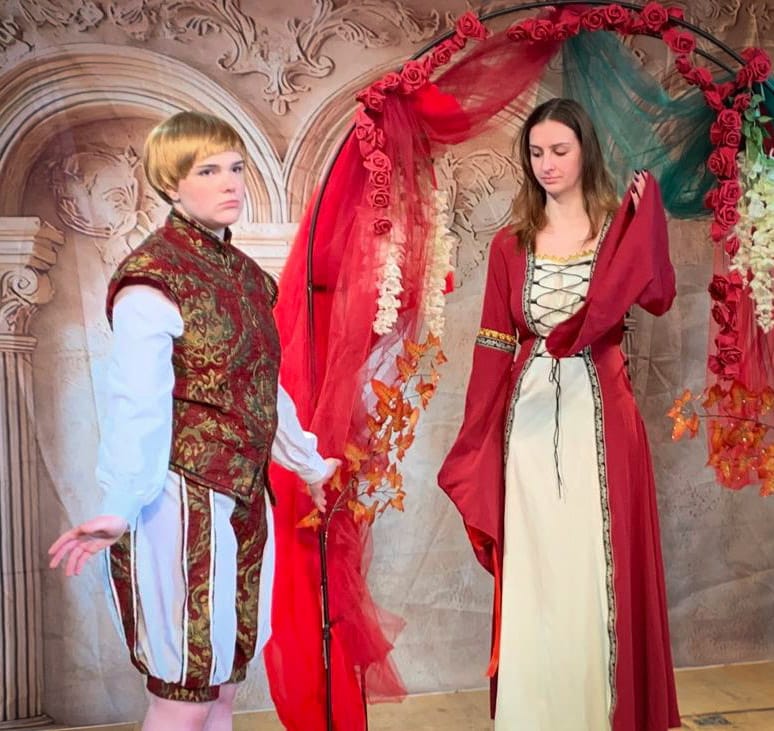
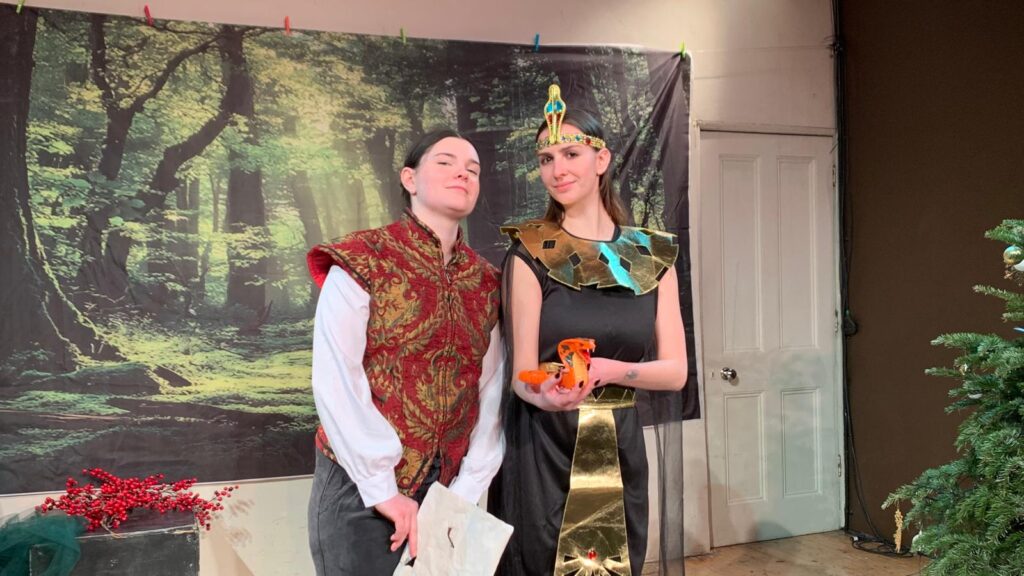
The film centres on Anne and Moll, two struggling Shakespearean actors, played by Natalia Kozbial (who also provided the choreography) and Niamh Nealon.
We follow them as they push a heavy basket of props into a noisy tavern, carving out a makeshift stage among drinkers who barely acknowledge their presence. With little more than determination and a collection of increasingly improvised objects, they begin to reconstruct fragments of Shakespeare’s world in front of an indifferent audience.
What follows is a rapid, physical distillation of the Bard’s imagination. Scenes, characters and themes emerge and dissolve through gesture and object, as the performers transform ordinary props into ever more elaborate and unexpected theatrical devices. The performance builds in intensity and invention, moving through tragedy, comedy and transformation in quick succession.
It culminates in a final act of collapse and revelation, as Prospero’s staff is broken, not with grandeur alone, but with a sense of release and disappearance, as if the entire weight of theatrical history is being gently but decisively set down.
The final reveal reframes everything. What we have witnessed is not a rapt audience in a living tavern, but a contemporary gathering of just three spectators, more absorbed in their phones than in the performance unfolding in front of them. The contrast quietly underlines the film’s central tension between inherited cultural richness and modern inattentiveness, where extraordinary acts of performance exist in the same space as everyday disengagement.
Recording the Score
The score for All The World was recorded with the Cape Town Symphony Orchestra, bringing a rich orchestral depth to the film’s compressed and highly structured visual language. The music was conceived as an integral part of the narrative rather than an accompaniment, shaped to mirror the rhythmic and choreographic flow of the piece.
Recorded in collaboration with the orchestra’s musicians, the score blends classical orchestral writing with a contemporary sensibility, allowing the emotional weight of Shakespeare’s world to sit beneath the film’s rapid, physical reinterpretation. The result is a sound world that expands the scale of the three-minute format, giving the film a sense of breadth and resonance far beyond its duration.
Listen to the final audio
Watch the dance rehearsals
Credits
A Straight 8 film by Steve Thompson
Screenplay and music: Steve Thompson
Original score performed by: Cape Town Symphony Orchestra
Choreography and prop design: Natalia Kozbial
Props and WHAM: Heather Thompson
First Assistant Director: Dan James
Cast:
Natalia Kozbial as Anne
Niamh Nealon as Moll
Produced by Gullwing Arts
On set photos